The main advantages of bitcoin over traditional assets
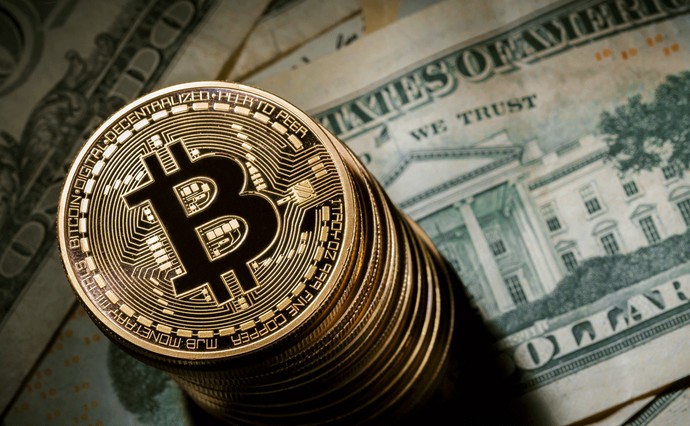
The crisis of 2020 gave investors many reasons to change their attitude towards cryptocurrencies. On the one hand, bitcoin began to be perceived as a defensive asset against the background of the depreciation of national currencies. On the other hand, the BTC rate quickly recovered after the March collapse in the markets.
As a result, large institutional investors began to transfer capital into digital money. Already in May, Paul Tudor Jones, a billionaire and founder of the Tudor Investment hedge fund, did this by investing 1% of his assets, or about $50 million, in BTC. Then the Canadian restaurant chain Tahini's transferred all its cash reserves to the coin, and MicroStrategy, which produces analytical software, bought the first cryptocurrency for $425 million.
Bitcoin vs gold
In 2020, bitcoin has been often compared to the precious metal. For example, in April, Bloomberg analysts said that the cryptocurrency is no longer a speculative asset and is becoming a digital version of gold. One of the reasons why these instruments are opposed to each other is the limited issuance. Gold reserves are limited by nature, bitcoin is limited by a program code that makes it impossible to issue more than 21 million coins.
Maria Stankevich, development director of the EXMO exchange, believes that there are many similarities between bitcoin and gold. In addition to limited issuance, both assets are decentralized, difficult to fake, and easy to recognize. However, cryptocurrencies have several advantages.
“Bitcoin is much more convenient to use as a means of payment: within a couple of seconds, you can send bitcoin to the other side of the planet and track the transaction. In addition, we are already seeing that many institutionalists are starting to look at bitcoin as a defensive asset,” Stankevich explained.
Artem Deev, head of the analytical department of AMarkets, spoke about other strengths of the cryptocurrency. In his opinion, one of the advantages of BTC is the absence of additional costs for its storage, while, for example, gold requires payment of a safe deposit box. Another aspect is security. Cryptocurrency is much harder to steal if, of course, it is held in a private wallet.
Deev also emphasized the lack of control over bitcoin by anyone. Not so with gold. It can be frozen by the state in a crisis situation. Another strong point is divisibility. Cryptocurrency is easy to break apart, which cannot be done with gold bars and expensive coins.
Bitcoin vs dollar
In 2020, bitcoin is often pitted against the dollar. The reason is also in the limited emission, which the American currency cannot boast of. The US authorities have resorted to a policy of quantitative easing to combat the economic consequences of the coronavirus pandemic. As a result of these measures, the money supply increases and the dollar depreciates.
Thus, since May, the DXY index, which shows the strength of the dollar against a basket of national currencies, has fallen from 100 to 93.4 points, dropping to 92.2 points at the moment. Bitcoin, on the contrary, strengthened against this background, which was noted by analyst Omkar Godbowl. He admitted that investors transferred capital from USD to BTC as a protective asset.
Bitcoin has several distinct advantages over the dollar, Stankevich is sure. These include the absence of a centralized issuer, declining inflation, and a finite quantity that reflects positively on the price. These factors make it possible to call cryptocurrency a more reliable asset of capital savings.
“The dollar is limited only by the imagination and requests of the Fed's typewriter, which continues to print currency uncontrollably. In addition, the political situation in the world and the high dependence on the position of the United States in the international arena clearly tell us that bitcoin is a more reliable way to store value today than the dollar,” Stankevich believes.
A similar position is shared by Yuri Mazur, head of the data analysis department at CEX.IO Broker. In his opinion, bitcoin is not subject to devaluation, which is inherent in the dollar. In this regard, the rise in prices for goods leads to an increase in the purchasing power of the cryptocurrency.
“Bitcoin is not subject to devaluation, since it has a limited supply initially set. That is, inflation in commodity prices leads to an increase in the purchasing power of bitcoin. Of course, this asset remains highly speculative, and the revaluation that it undergoes sometimes remains out of sight of the broader market. However, in the current conditions of a deep crisis, the economic recession of the world's leading economies and the devaluation of the dollar, this phenomenon can become much more noticeable," Mazur emphasized.
Deev called the price increase the main advantage of bitcoin over the dollar, however, as well as over other currencies. In 2020, the ruble lost 15-30% against the dollar and the euro, and about 50% against the first cryptocurrency. But this difference could get even bigger because BTC has upside potential that fiat money is not capable of.
“It is predicted that before the end of the year, bitcoin may exceed $14,000-20,000 per coin, and within five years, approach the value of $100,000. Such a strengthening is typical only for digital assets, fiat currencies have never shown such growth,” explained Deev.
Bitcoin vs stocks
In March 2020, the markets crashed. As a result of the panic sale of assets by investors, the leading stock indices fell by 20-30%. The shares of companies affected by the quarantine have become much cheaper and many have not yet recovered to pre-crisis levels.
Bitcoin also showed a rapid fall in early spring. The price of the coin decreased from $10,000 to $3,800, but immediately returned to growth. So, by May, the cryptocurrency exchange rate fully recovered, and in August it exceeded $12,000. Mazur is sure that this indicates an increase in investor interest in cryptocurrency and makes it possible to become a protective asset.
“Bitcoin showed a much more active growth after the February fall than the US stock market, which still has not reached the pre-crisis level…this indicates the higher volatility of bitcoin and the growing interest of investors in this asset. In the long term, bitcoin can become a defensive asset,” Mazur suggested.
A clear advantage of bitcoin over stocks is independence from the issuer. A company can go bankrupt for various reasons, such as quarantine, falling demand for products, or breaking the law. In this case, the securities of this company may collapse, as happened with Wirecard. Cryptocurrency is protected from such risks.
Other advantages of BTC over stocks were cited by Deev. For example, you don’t need a broker to work with cryptocurrencies. Also, for investments in the stock market, it is important to take into account a large number of factors, from the global situation to the financial performance of a particular company. In the case of digital money, it is enough to be informed. In addition, the coin is less dependent on the news background.
“Securities of even the best issuers, blue chips, can regularly become cheaper due to the slightest news. Bitcoin, on the contrary, is constantly growing, which reflects its growing popularity among private and institutional investors,” Deev said.
Representatives of the crypto industry are also confident that bitcoin is better than traditional assets. For example, in September, the early crypto billionaires and founders of the Gemini exchange, the Winklevoss brothers, listed many reasons why the first cryptocurrency outperforms gold and the dollar, and called these advantages a driver for BTC to rise in price to $500,000.